
Search Engine Optimization (SEO) has greatly changed through the years. Initially, SEO focused on placing the right keywords and building as many links as possible to generate rankings for a website. Today, however, evolution has occurred. Search engines have become more sophisticated, constituents expect answers to be faster and they expect answers to be accurate, and the users’ methodology in searching for information has significantly changed. In the new era of digital marketing, in order for any business to get ahead, it is critical to have an understanding of the future of search engine optimization.
The future of search engine optimization is no longer simply about getting the number one rank in Google. It is about creating content that both human’s and technology can easily understand. When creating content for your website, it must provide true value to the end user, to answer questions of users, and to provide a seamless experience which a search engine will recognize and reward. This shift has resulted in the emergence of three areas of SEO which differently define modern SEO — AIO (Artificial Intelligence Optimization), AEO (Answer Engine Optimization), and GEO (Generative Engine Optimization). All combining efforts to allow brands to connect with both human users and machines while elevating the digital presence.
The Evolving Future Of SEO Landscape
SEO used to be a technical task all about keywords, backlinks, and meta tags. Although these remain important, search engines now employ AI to grasp the actual meaning of words. Google’s RankBrain, BERT, and MUM updates were done to determine why users search and not merely what they are typing.
This change illustrates how the future of search engine optimization will increasingly be more human-centric. Good content these days has to be helpful, relevant, and readable — not merely keyword-stuffed.
Emerging techniques such as AIO (Artificial Intelligence Optimization), AEO (Answer Engine Optimization), and GEO (Generative Engine Optimization) are pushing SEO forward, enabling companies to relate better to humans and search engines alike.

What is AIO (artificial intelligence optimization)
As it says, AIO (artificial intelligence optimization) is simply that; it is concerning the AI itself. Artificial intelligence is not just within in the scope of SEO, it is found almost anywhere in a smart chatbot, a voice assistant, or almost any piece of software that is summarizing or recommending something in any way.
When asking a question on an application like ChatGPT, Bing Copilot, or Google Gemini we do not get a list of links, we receive a direct answer based on browser content. If we want an answer that cites or pulls our content in to use in their answer we must have AI-friendly content.
And here are a few suggestions to achieve this:
- Use schema markup or structured data. If you mark your content up and include structured data, AI will be able to learn instantly what your content is about.
- Be precise and fact based. Research-based, fact-checking content using reliable sources is also easiest for AI tools to use.
- Be natural in tone. Write in an unforced way so it becomes easy, not hard, to read.
- Use mixed types. Collect images, videos and other media because AI systems are interpreting images now as well.
After all, AIO is about making your content readable for AI systems, making it easier for AI systems to understand, and making it more shareable for AI systems in its final state.

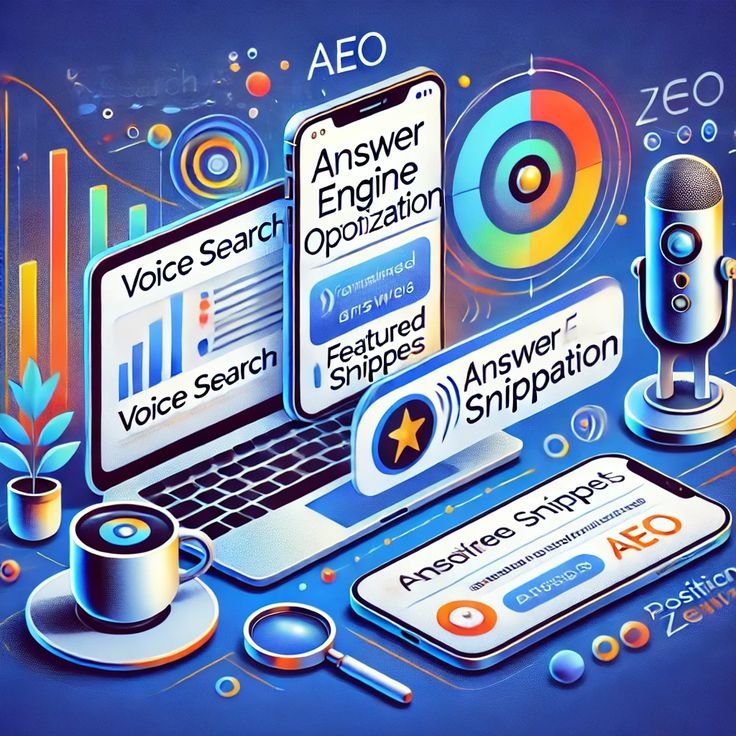
What is AEO (Answer Engine Optimization)
Answer Engine Optimization (AEO) simply means optimizing your content to rank as the preferred answer in AI-powered tools and voice assistants. Think of Siri, Alexa, or Google Assistant — these tools no longer display multiple website links; instead, they provide one complete, trusted answer.
This shift marks a major part of the future of search engine optimization, where success isn’t just about ranking on Google’s first page but about being the answer that users hear or read directly from AI systems. When your content becomes that authoritative solution, it creates powerful brand awareness and positions your business as a leading voice in your niche.
To rank for AEO:
- Make it QA. Create content that answers a real user question, critically.
- Write like people – naturally! People do not response in people’s natural speech. Write as closely as how people genuinely phrase the questions.
- Be brief and concise. Answer voice enabled assistants in a short and sweetness – 40 – 60 words or less.
- Publish on FAQ pages. If your site has frequently asked pages, answering engines find correct answers faster.
- Use natural long tale keywords – instead of being short, generic keywords, use words that are nearly unfamiliar from the way questions are naturally asked.
AEO will place your content in the very position of being “the-go-to-answer” by AI assistants. The more your content emulates the way humans search , the better it is more likely your answer will feature.
What does GEO (Generative Engine Optimization) indicate?
Generative Engine Optimization (GEO) is one of the most revolutionary changes shaping the future of search engine optimization. It focuses on making your content appear within AI chatbot or search assistant responses on tools like ChatGPT, Perplexity, and Bing Copilot.
Instead of showing a list of links, these AI-driven systems provide detailed, conversational answers — often full paragraphs written using information pulled from various online sources. GEO is all about ensuring your brand or content is featured in those AI-generated results, giving you visibility where people now search for direct answers rather than web pages.
As we move deeper into the future of search engine optimization, mastering GEO allows brands to stay relevant in an AI-first digital world. It’s not about chasing rankings anymore; it’s about being part of the intelligent responses that users trust, helping your brand stand out in a smarter, more conversational search landscape.
In the effort to leverage geographic SEO (GEO):
- Develop your credibility and authority. Obviously, AI systems view credible and authoritative publications more favorably. Develop content based on facts, publish it, and keep it refreshed throughout time.
- Make it uncomplicated and easy to read. AI systems spider and compile content from all corners of the web. The simpler it is for consumers to locate your content, the more difficult it is for AI to manipulate the content.
- Publish it on every platform. AI doesn’t exist on a single site. AI will find the content in blogs, YouTube videos, social media, etc. Be everywhere.
- Develop new and original thoughts. If the content has some new research, new case studies, or new perspectives from experts, chances are your work will be quoted by AI.
GEO is gaining more of a presence due to users avoiding traditional search engines, and using AI based systems. The idea is to have your credibility and authority be a subject of conversation of the AI based system.
Ending Note
In the constantly future of search engine optimization, humans and machines will share success. The combination of AIO, AEO, and GEO is driving this shift, enabling brands to develop content that favors audiences and algorithms.
AIO improves how AI algorithms know your site, increasing visibility on smart platforms. AEO assists voice assistants and answer engines to pick your content as the best and most relevant answer. GEO sees to it that generative AI instruments like ChatGPT, Bing Copilot, and Perplexity name your brand explicitly in their responses and insights.
The actual victors of the future of search engine optimization will be those companies that focus on creating authentic, helpful, and consistent content. Those who write for humans and machines alike — with clarity, trustworthiness, and value — will fashion the future generation of online discover